
California Parole Hearing Authority
The official body is the Board of Parole Hearings, or BPH. It is a division of the California Department of Corrections and Rehabilitation. BPH conducts parole-suitability proceedings and nonviolent-offender parole reviews for adults under CDCR jurisdiction. Its role differs from that of a parole agent. The Board decides suitability matters and certain discharge reviews, while the Division of Adult Parole Operations handles state supervision after release.
A suitability hearing sits between the sentence rules and a possible release to parole. It does not erase the sentence, replace the applicable eligibility date, or prove that custody has ended. The panel reviews the case under the legal standards that apply to that person. Its outcome then moves through any required review. A county jail release, county probation matter, or federal release is outside this BPH schedule unless the person also has a separate CDCR case.
The CDCR home page places BPH within California's state corrections structure.
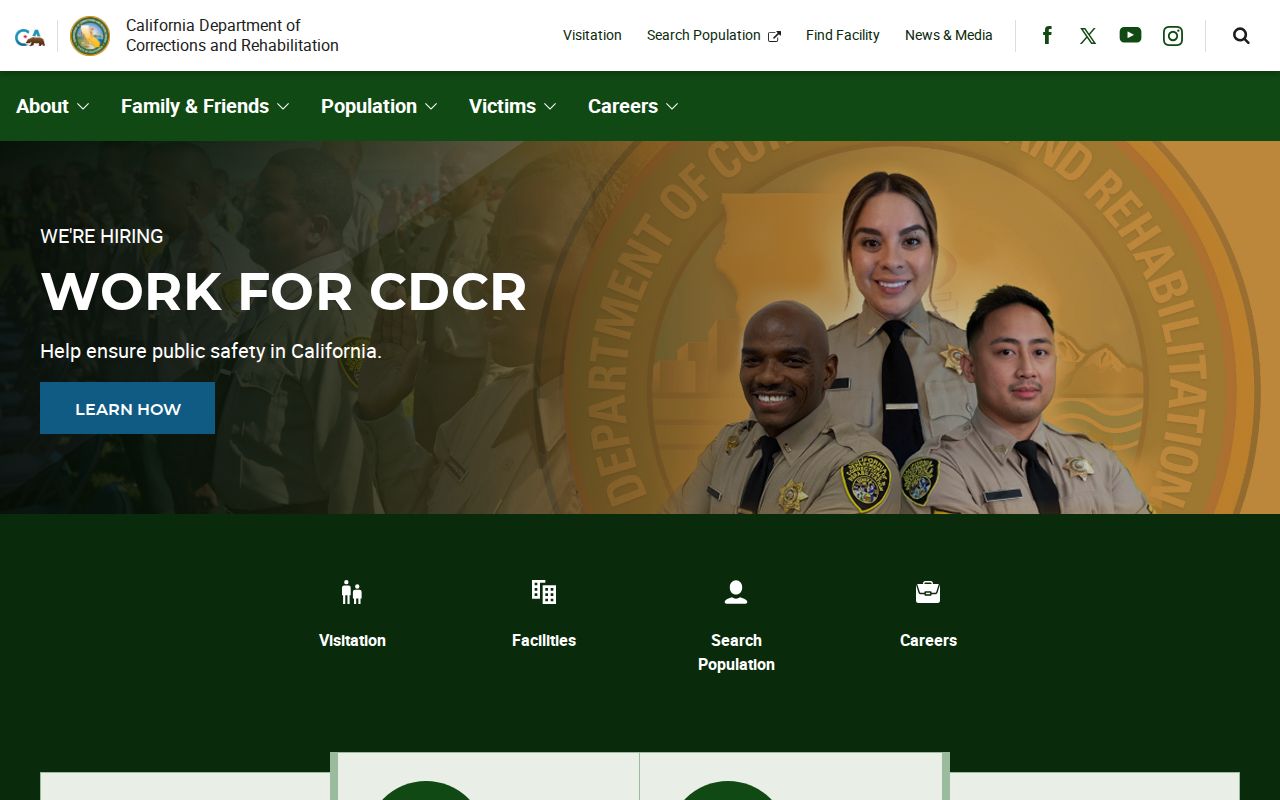
This agency structure helps separate a California parole hearing from county release records and from post-release field supervision.
Find California Parole Hearing Dates
BPH publishes monthly hearing calendars through its official schedule page. The calendars identify the person and CDCR number, hearing type, commitment county, panel, location or videoconference method, date, and time. Those fields allow a careful identity match. The commitment county is the county tied to the offense and case, not necessarily the prison location or a later supervision destination.
- Open the official BPH hearing schedule and choose the relevant monthly calendar.
- Search the calendar for the person's name or CDCR number. Use the correctional number when available because names can repeat.
- Compare the commitment county, hearing type, panel, location or video setting, date, and time before deciding that the entry is a match.
- Return to the schedule after the next update if the listing may have changed. A calendar entry can be moved, postponed, cancelled, or continued.
- After the hearing, move to the separate suitability-results page. Do not read the calendar as the decision.
The official California BPH schedule page is the source for current calendar files.
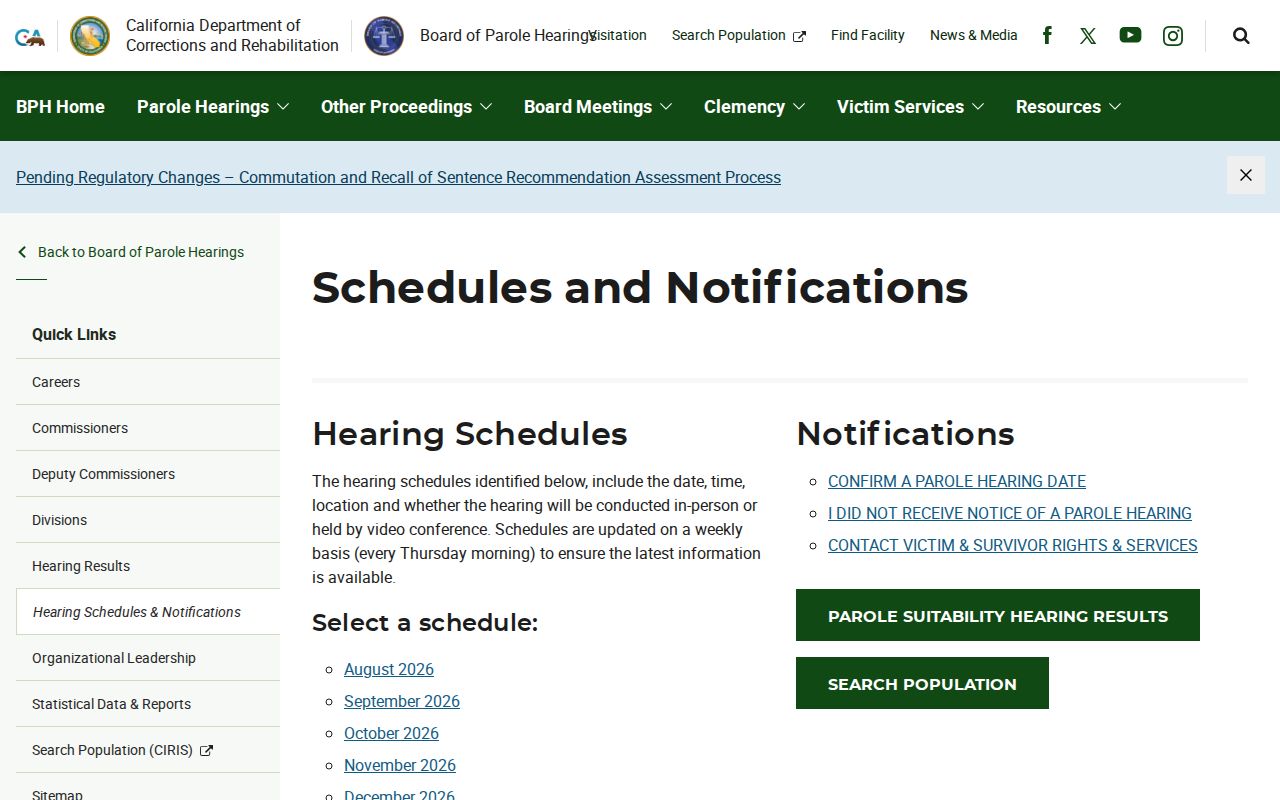
The calendar's multiple identity and setting fields are meant to be read together, rather than reduced to a name and date.
Note: A hearing calendar is a changing schedule, so record the calendar month and check the official page again before relying on a listed time.
California Thursday Hearing Updates
California's schedule has an unusually precise publication rhythm. BPH says it updates hearing schedules every Thursday morning. This Thursday cadence is valuable when a hearing appears to be missing or has recently changed. It also sets a sensible time to recheck without assuming that an older downloaded calendar remains current.
Update timing does not turn every Thursday into a decision date. The schedule and the results serve different purposes. A new calendar may show a later setting, changed panel, or different hearing method. The result archive records the outcome after proceedings. When an entry vanishes, look for a new month, changed status, or later result. Do not call the person released based only on a missing calendar line.
Why is a hearing missing? The person may be outside BPH's suitability process, the name may differ, the event may appear in another calendar period, or the matter may have changed status. Confirm the CDCR number, then use the current schedule and archived outcomes. If the record remains unclear, request the relevant BPH record rather than guessing.
Find California Parole Decisions
BPH posts weekly and monthly archived outcomes on its parole-suitability hearing results page. The research did not establish a separate all-history database that accepts any person's name and returns every BPH decision. That limitation matters. A search may require reviewing the correct weekly or monthly table and matching the CDCR number, not just entering a name once.
- Begin at the official BPH suitability hearing results page.
- Select the weekly or monthly result period that follows the scheduled proceeding.
- Match the name with the CDCR number and other available case details. Do not rely on the name alone.
- Read the exact result term, such as Grant, Deny, Continue, Cancelled, Split, Postpone, Waive, or Stip.
- Use the outcome definition before making a release claim. A Grant is a recommendation for release to parole and may still face legal and gubernatorial review.
- If more context is needed, request the hearing transcript after the release period allowed by law.
The BPH results archive displays the official suitability outcome tables.
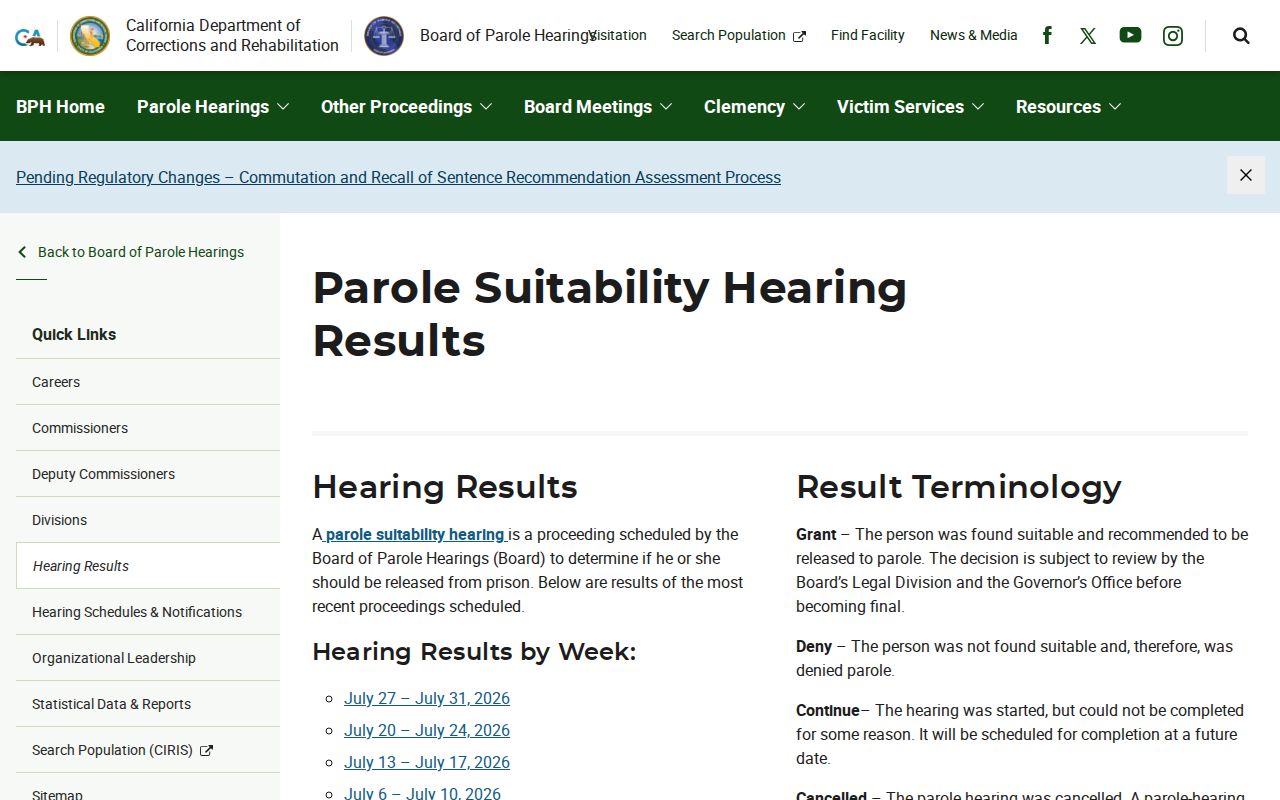
Because BPH publishes period-based tables, the hearing date and CDCR number are key tools for locating the correct outcome.
California Parole Outcome Meanings
BPH uses defined outcome terms. They describe what happened in the proceeding, not always what happened to custody on the same day. Reading the exact term prevents a continuance from being mistaken for a denial and a grant from being presented as a completed release. The result should remain paired with its date and case identity.
| Outcome | Meaning | Release significance |
|---|---|---|
| Grant | The panel found the person suitable and recommended release to parole. | Further legal and gubernatorial review may follow. It is not proof of physical release. |
| Deny | The panel found the person unsuitable. | No release recommendation came from that hearing. |
| Continue | The hearing began but remains incomplete and will resume. | There is no completed suitability outcome yet. |
| Cancelled | The hearing became unnecessary or will be rescheduled. | The label is ambiguous. Examples can include court-ordered release or death, so verify the reason. |
| Split | The panel did not reach a unanimous decision. | Do not treat the entry as a final grant. |
| Postpone | The hearing moved before it began. | Look for a later setting. |
| Waive | The person waived the hearing. | No suitability grant came from that setting. |
| Stip | The person accepted a stipulation of unsuitability. | The stipulation produces a denial for the stated period. |
The result table can answer what the panel recorded. It cannot, by itself, answer the later date of release. For current custody, use the proper CDCR channel. For parole after release, use the supervision record. The California post-release supervision page explains the DAPO and county PRCS split that follows release.
Note: Keep the Board's exact outcome word in notes or requests because changing the term can change the legal and practical meaning.
California Parole Eligibility Rules
Penal Code section 3041 supplies the central suitability framework for indeterminate and life-term cases. The Board consults during the sixth year before the minimum eligible parole date. Generally, a panel meets one year before that minimum date and should normally grant parole under the statute unless public-safety considerations require a longer period of incarceration. A suitable decision becomes final after the review period unless a statutory review ground applies. Release cannot occur before the applicable eligibility date.
This is not a universal formula for every California prisoner. Sentence type and the governing statute matter. A parole-eligible date is the point at which a case may reach the Board under the applicable process. It is not a promised release date. CDCR and BPH also use Earliest Possible Release Date, or EPRD, for determinate terms. EPRD can move when credits are earned, denied, lost, or restored. The two milestones should not be merged.
The BPH parole eligibility page explains eligibility and the distinct EPRD concept.
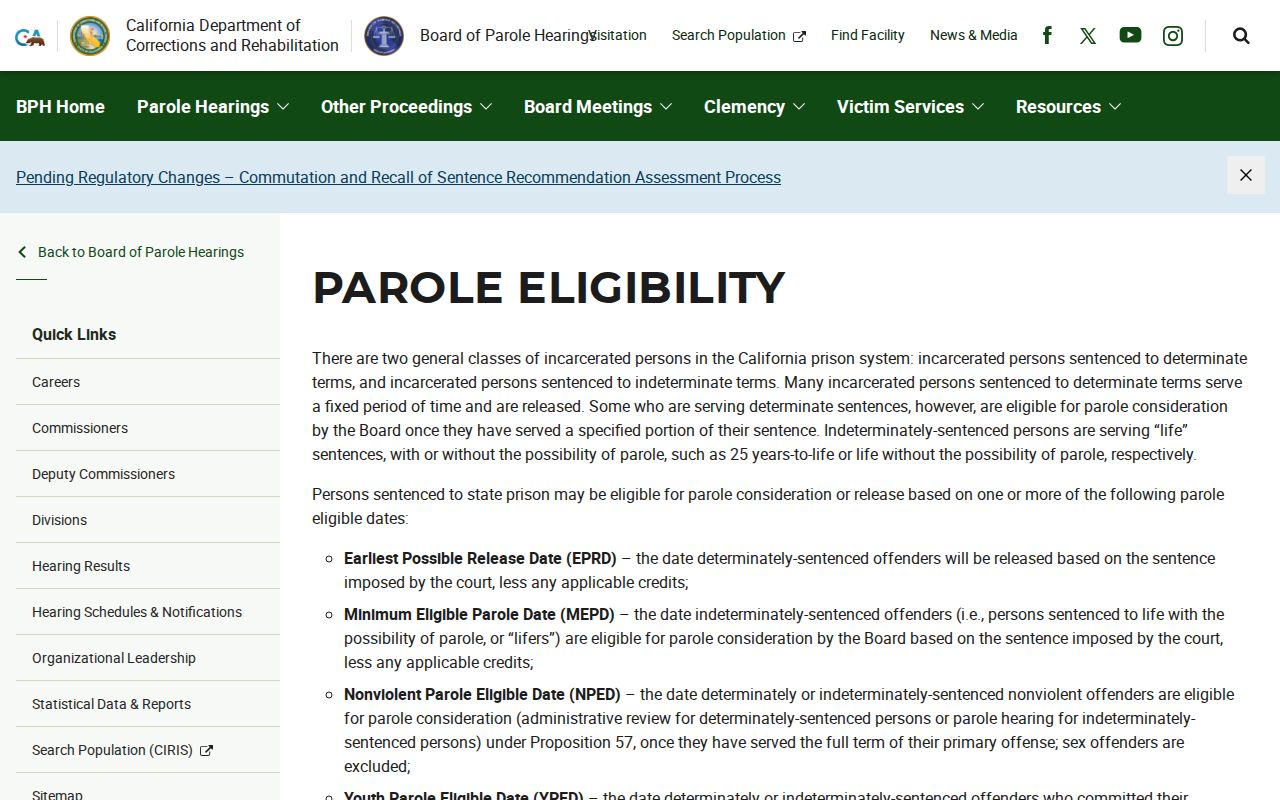
The official wording supports a narrow conclusion: eligibility opens a path to review, while a later completed release requires more evidence.
California Hearing and Custody Records
CIRIS is the California Incarcerated Records and Information Search. CDCR describes it as a search for people in custody at a CDCR institution. Its documented public field includes a parole-eligible month and year. CDCR does not document CIRIS as a former-prisoner archive, a BPH decision database, or proof of a completed release. A person absent from CIRIS may have been released, transferred, omitted, or mismatched.
The official CIRIS search can help confirm the current CDCR custody layer.
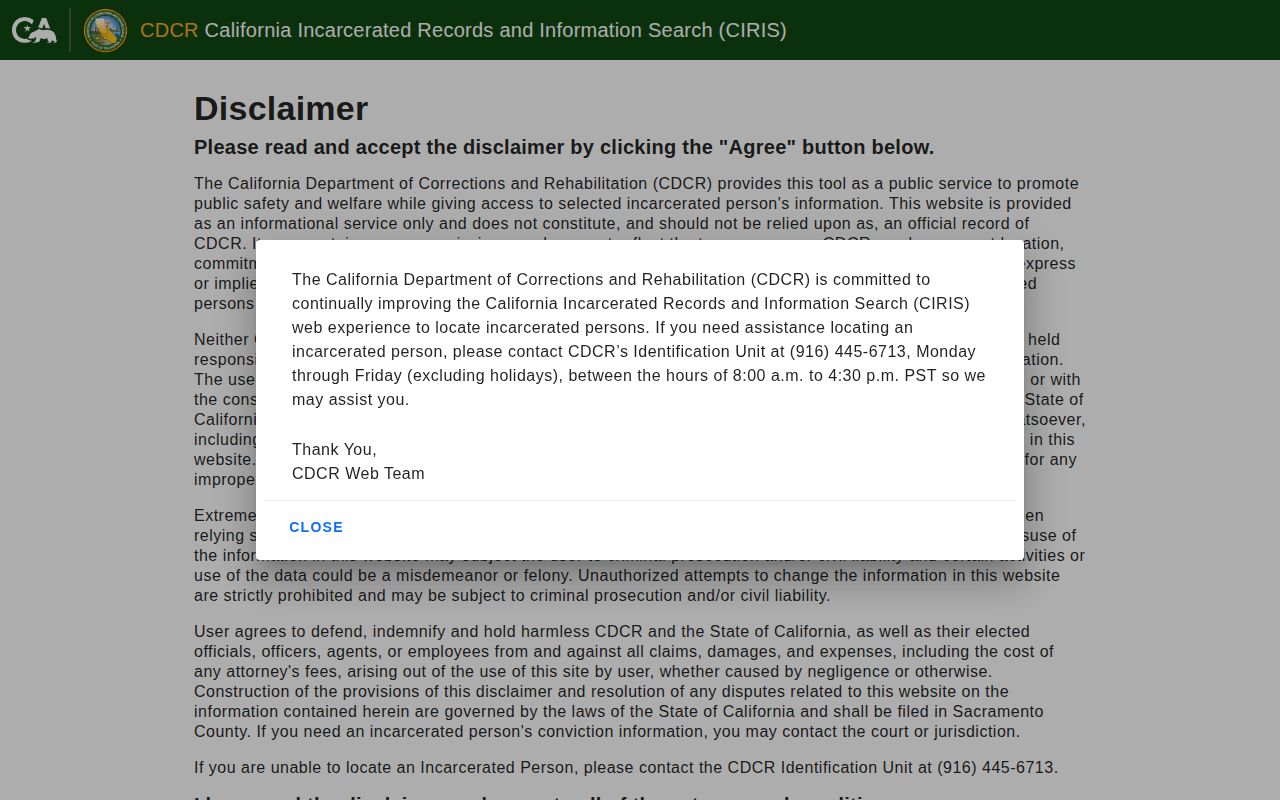
Use CIRIS beside the BPH calendar and results, not as a replacement for either hearing record.
A reliable sequence keeps each source in its lane. The calendar answers when a proceeding is set. The results page reports the panel outcome. The transcript gives a fuller record of the proceeding. CIRIS addresses current CDCR custody. DAPO or county probation addresses supervision after release. If the question concerns a county-jail case with no CDCR commitment, use the county jail, superior court, and local records channels instead of BPH.
California Parole Hearing Transcripts
A result code may not explain why the panel acted. BPH provides electronic hearing transcripts for relevant suitability proceedings. Penal Code section 3042(b) requires recording and transcription for the covered life-sentence hearings. Transcripts are releasable no earlier than 30 days after the hearing. Most electronic copies are free. Records from 2001 and earlier that remain on microfilm or fiche carry a per-page charge.
Use the BPH transcript request page and identify the person, CDCR number, and hearing date as precisely as possible. Those fields help distinguish the proceeding and reduce delay. Ask for the transcript itself when the words used by the panel matter. A calendar printout or short outcome label cannot substitute for the full proceeding.
The transcript may explain the hearing record, but it does not serve as a live custody locator. If the panel granted parole, later review and release processing still matter. Confirm the final status through the responsible official sources. When the Board's record and a custody source appear to conflict, compare their dates first. They may describe different points in the same process.
Note: Wait for the stated transcript release period, then include the CDCR number and exact hearing date to help BPH locate the right record.
Verify California Release After Grant
A Grant is preliminary in a practical release search. It means the panel found the person suitable and recommended release to parole. The Legal Division and gubernatorial review may still follow. The applicable eligibility date also remains a limit. Calling the person released at the moment the result table says Grant would overstate what the BPH record proves.
To verify what happened next, retain the decision date and CDCR number. Check the final Board record and the correct current CDCR custody channel. If supervision began, use DAPO for state parole or the named county agency for PRCS. If the person remains in custody, ask CDCR about the current record rather than calculating a release date from the hearing alone. The sequence is Hearing scheduled, Panel outcome, Required review, Release processing, then Supervision or another lawful status.
A cancellation also needs care. BPH gives examples that can include court-ordered release or death, while other cancellations may be rescheduled. The word does not supply one universal reason. A continuation means the hearing is incomplete. A postponement means it moved before starting. Keeping those distinctions intact produces a more accurate account than turning every closed calendar entry into a release event.
The best evidence is cumulative. Match the calendar, official outcome, any transcript or final decision, current custody record, and supervision custodian. Each source answers one part. Together they can show the path from eligibility through hearing review to actual release without inventing a status that California does not publish.