
CDCR Offender Search Scope
The official CDCR offender search in CIRIS covers people in custody at a CDCR institution. CDCR’s launch description names the public fields: a person’s name, age, CDCR number, current location, admission date, commitment county or counties, and parole-eligible month and year. The search accepts either a CDCR number or a name after the user accepts its disclaimer. A CDCR number is the strongest identifier because names can match. Age information can help narrow a name search.
CIRIS does not document a former-prisoner archive. Official material reviewed for California does not promise a Released or Discharged result, a completed release date, a release type, a field naming supervision after release, or any period for retaining former prisoners in public results. CIRIS also says its selected information is informational and may be incomplete, late, or wrong. A current match establishes CDCR custody. An absent match does not establish freedom, release, discharge, death, or transfer.
The official CIRIS landing page shows where the current-custody search begins.
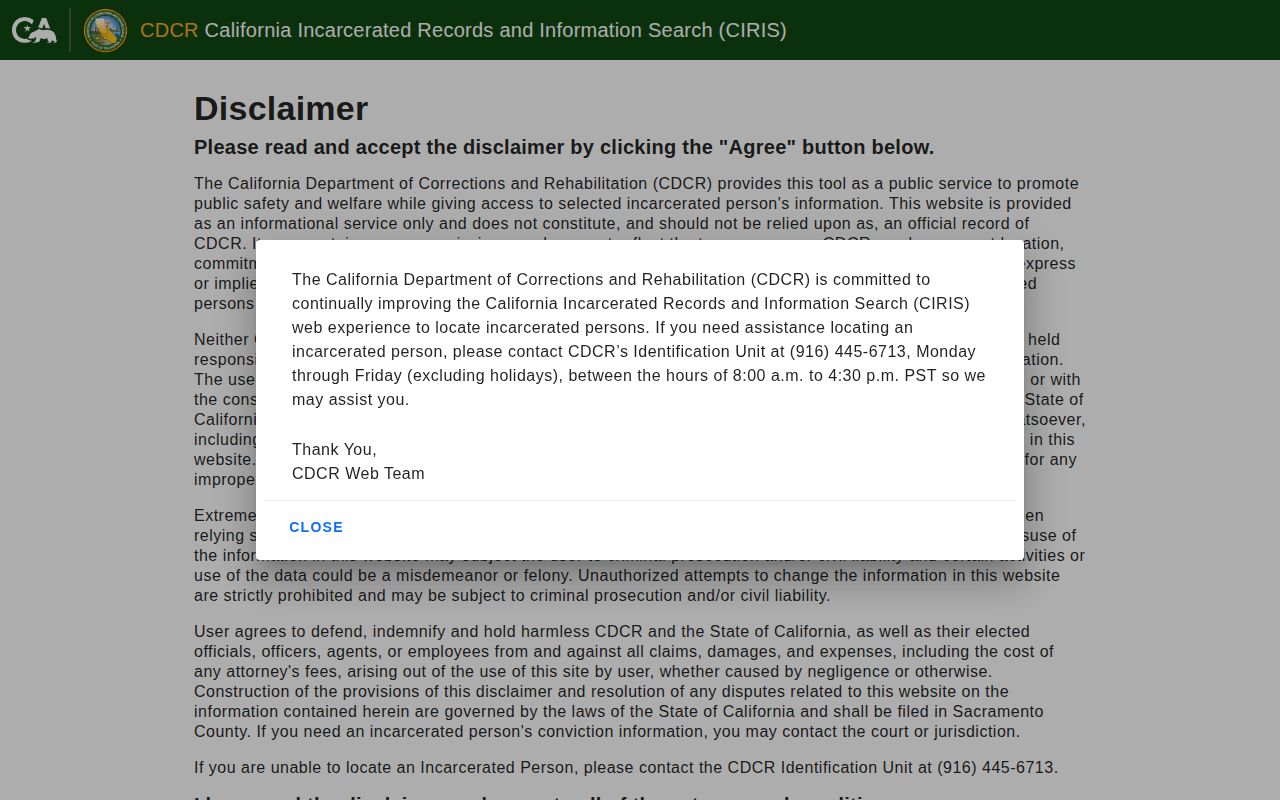
Use that screen to identify a current CDCR record, then move to official records and agency contacts when the question concerns a completed release.
A name missing from CIRIS is a lead for more checking, not proof that CDCR released or discharged the person.
Use the CDCR Offender Search
Begin with the identifier most closely tied to CDCR. A recent transfer, spelling change, common name, or stale source can cause confusion. Keep the custody owner in view. CIRIS concerns state prison custody, while a sheriff controls its county jail roster and the federal government controls BOP and ICE locators.
- Open CIRIS and accept the posted disclaimer.
- Search by CDCR number when one is known. Otherwise enter the name and use available age information to narrow likely matches.
- Open the matching record and compare the name, age, CDCR number, commitment county, admission date, current institution, and parole-eligible month and year.
- Treat a displayed institution as current CDCR custody. Do not rename the parole-eligible field as a release date.
- If no match appears, contact the Identification Unit and then follow the records, supervision, hearing, and court routes that fit the case.
A CDCR number should be preserved once found. It helps distinguish people with similar names and is required for some specialized record requests. For family inquiries, CDCR notes that date of birth can assist the Identification Unit even though CIRIS’s documented public workflow centers on the number or name.
| CIRIS field | What it can establish |
|---|---|
| CDCR number | The agency identifier for the current record and a key for later requests. |
| Current location | The CDCR institution reported for a person now in custody. |
| Date admitted | When the documented CDCR admission began, not the date of a future release. |
| Commitment county | The county or counties tied to the prison commitment. |
| Parole-eligible month/year | An eligibility milestone, not a promised or completed release date. |
Verify a California Release
When CIRIS returns no match, the next step is the CDCR Identification Unit. CDCR lists 916-445-6713, Monday through Friday except holidays, from 8:00 a.m. to 4:30 p.m. Pacific. Ask whether the available identifiers can resolve a release, transfer, omission, death, or identity mismatch. The unit is a better source than an inference drawn from a blank screen.
The right follow-up depends on what happened after prison. State parole is handled by the Division of Adult Parole Operations, known as DAPO. Postrelease Community Supervision, or PRCS, belongs to the county probation department named in the release notice. A person leaving prison in one county may report to probation in another because CDCR sends the pre-release packet to the county of last legal residence. A lifer case may also have a Board of Parole Hearings schedule or result, but a BPH grant only recommends release and remains subject to review.
The CDCR contact page collects the Identification Unit and public-record routes used after CIRIS stops answering the question.
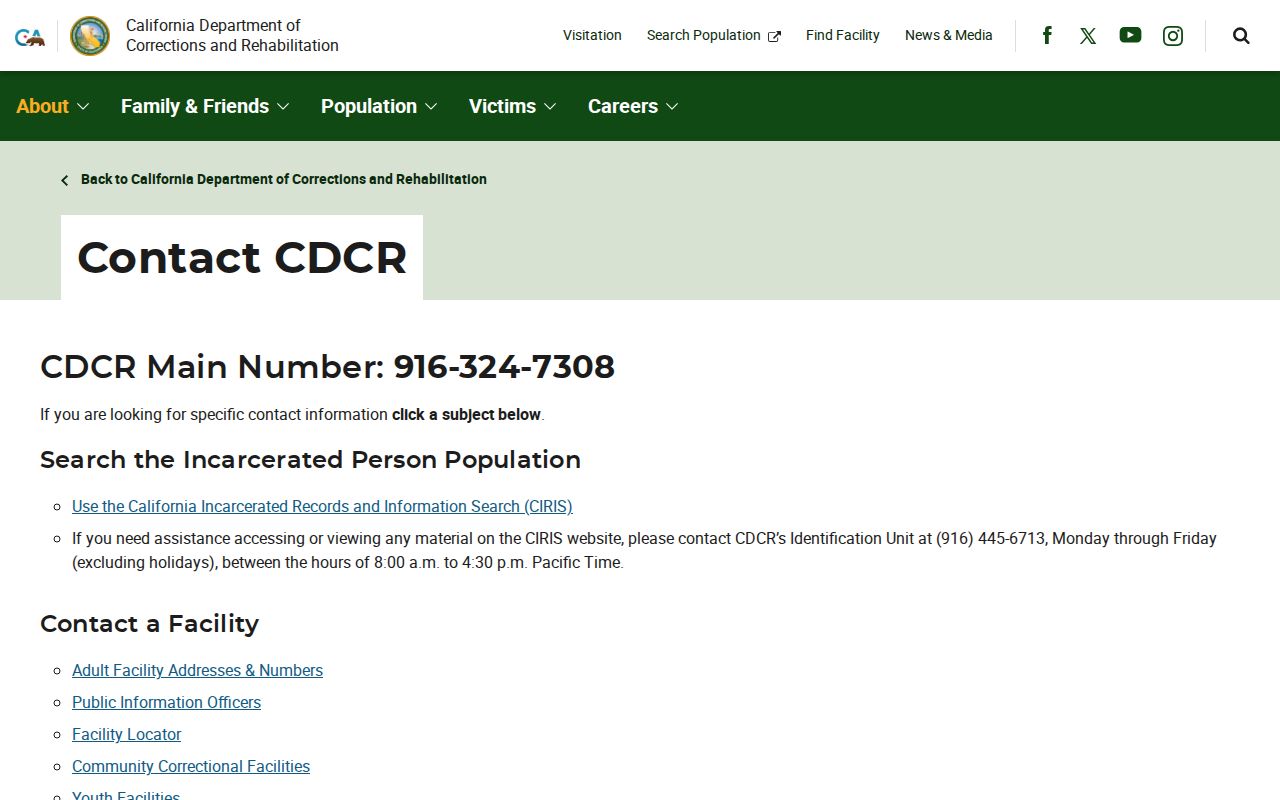
That official contact route is especially important because California has not documented a former-prisoner status field in CIRIS. For a legal disposition, pair CDCR information with the superior court that entered the sentence. California has no single statewide trial-court name search. The filing court can show a sentence, custody credit, later order, remand, or other action that a current-custody locator cannot explain.
California Prison Release Categories
California state-prison exit is not one event label. CDCR research distinguishes direct discharge, release to state parole, and release to PRCS. A direct discharge ends the prison term without a following CDCR parole term. Parole places the person under DAPO. PRCS places an eligible person under county probation, and Penal Code section 3457 states that CDCR has no jurisdiction over a person on PRCS.
| Release path | Who follows the case | Best verification route |
|---|---|---|
| Direct discharge | No following CDCR parole term | CDCR release or discharge record and sentencing-court record |
| State parole | CDCR Division of Adult Parole Operations | DAPO unit, release notice, and relevant BPH record |
| PRCS | Responsible county probation department | Release notice and county probation contact |
Penal Code section 3000 governs parole following specified prison terms. Its length and conditions depend on the offense and sentence, so there is no sound statewide shortcut. Penal Code sections 3451 through 3453 direct many releases after October 1, 2011, to PRCS while excluding listed categories. The pre-release notice identifies the release date, maximum supervision period, and the responsible county agency’s name, address, and phone. It generally instructs the person to report within two working days.
The CDCR PRCS contacts page explains the packet and county routing.
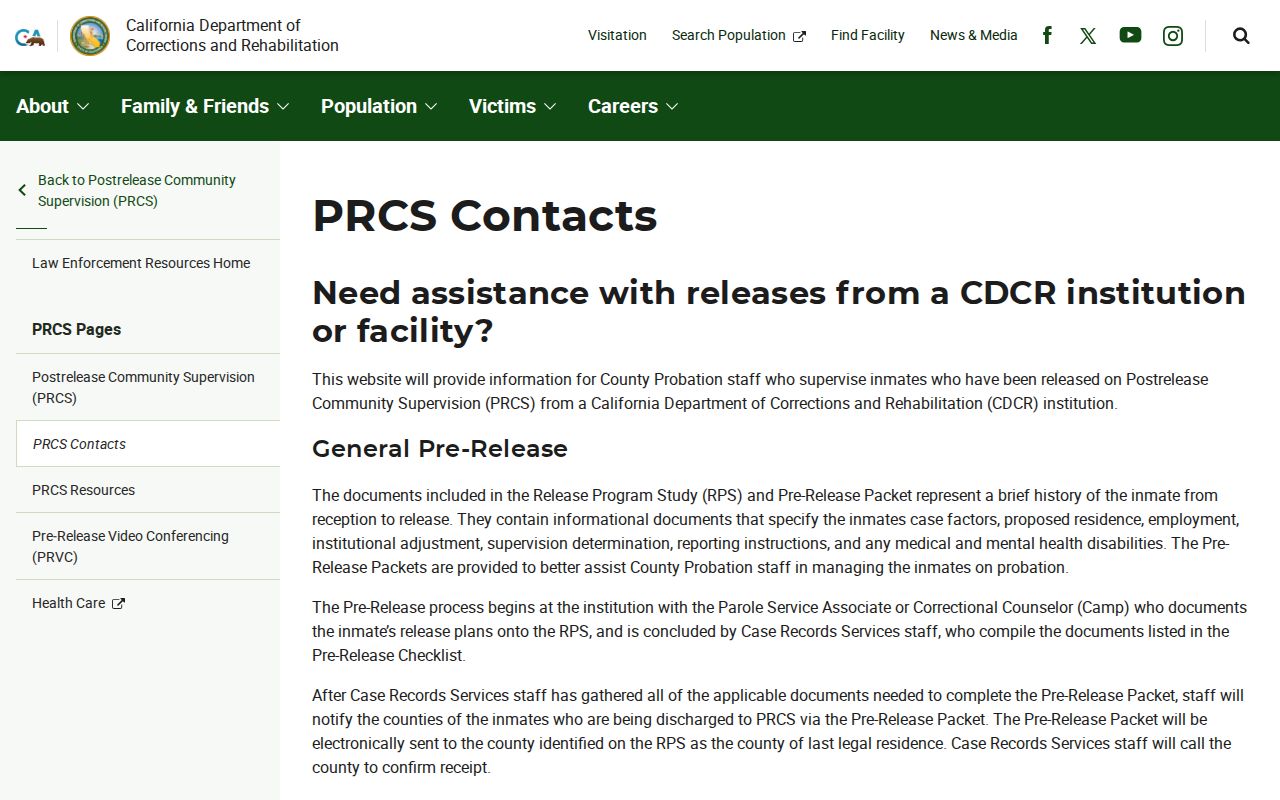
The packet is the practical bridge from a state institution to the county agency that assumes PRCS responsibility.
California Release Dates in Context
CIRIS’s documented date field is a parole-eligible month and year. It should never be presented as the actual day a person will leave prison. For a determinate sentence, CDCR uses Earliest Possible Release Date, or EPRD. Title 15 defines EPRD as the earliest date under the calculation at that time, assuming the maximum available conduct credit and no forfeiture. Credits can be earned, denied, lost, or restored, so the calculation can move.
A Maximum Release Date reflects service of the full court-imposed term after specified credits. Penal Code section 2932(e) requires notice to the prisoner of the anticipated time-credit date and later changes. Penal Code section 2933 describes qualifying worktime credit as earnable and forfeitable rather than guaranteed. Other laws apply limits based on the conviction and term. That mix is why an online date should not be treated as a firm appointment.
The BPH parole-eligibility explanation separates EPRD from the several parole-review milestones.
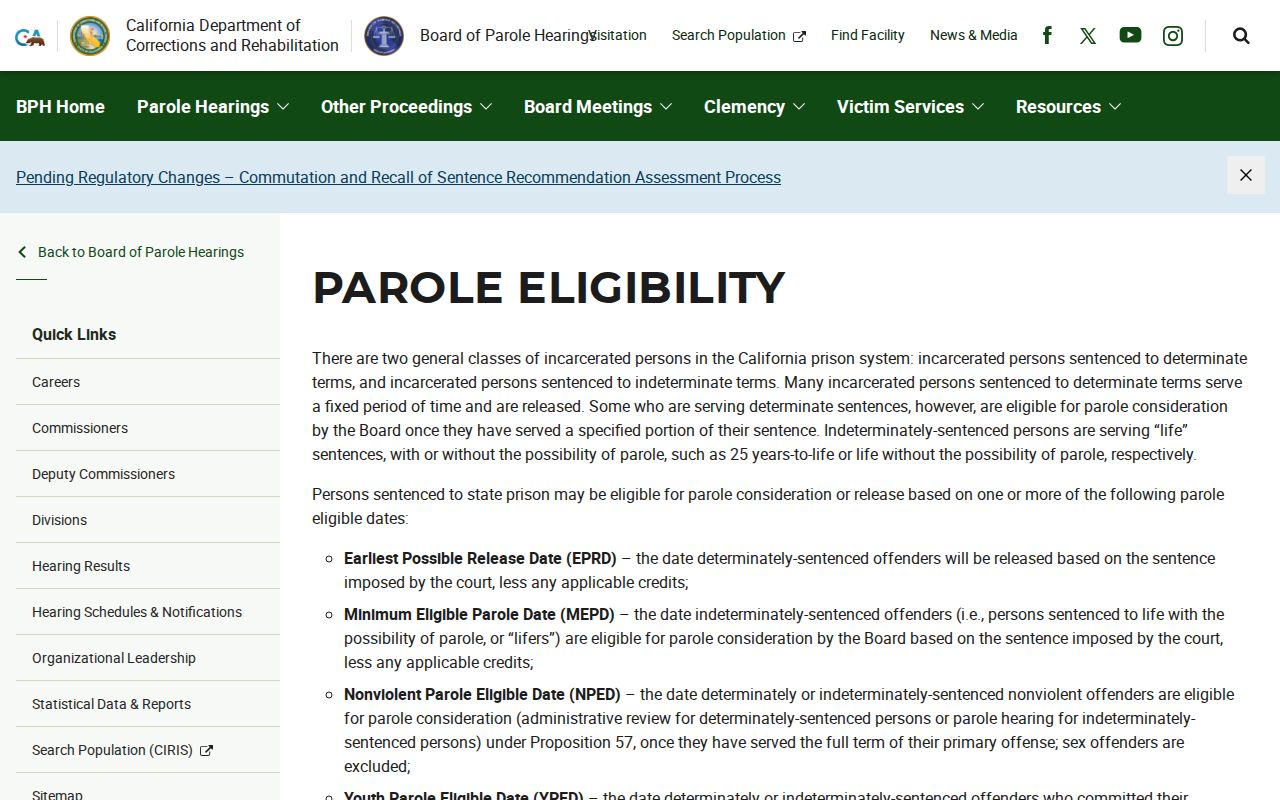
That distinction keeps a projected calculation, an eligibility date, a grant, and a completed physical release from being collapsed into one claim.
For a focused treatment of changing calculations, use the California Release Date Lookup. The decisive record still comes from CDCR case records and the sentencing court, not a generic calculator.
California Release Allowance Choices
California’s release allowance is a distinct part of the exit process. Penal Code section 2713.1 and CDCR’s 2025 rulemaking identify a $200 allowance for qualifying releases. CDCR training explains that a person serving six months or more in a CDCR or contract facility receives that amount minus release clothing and public transportation. It is therefore inaccurate to describe every qualifying release as $200 in cash.
Rules effective October 1, 2025, provide a choice after advance notice, normally at least ten business days before release. The listed methods include a check or, when available under the rule, a debit card. If no choice is made, the default is a check. A debit card can be unavailable in specified cases, including some community-program or detainer situations, medical inability, or a provider’s refusal.
Transport also affects the amount and process. The institution arranges transportation unless an approved private party contacts it at least three days before release. Trust-account funds may be combined on a debit card within provider limits, while other cases use a check. CDCR’s CAL-ID program separately offers eligible people a California identification card at release and operates at all CDCR institutions. Those are official release-day details, but none of them creates a public CIRIS release entry.
The CDCR agency site is the starting point for current rules and statewide program routes.
Current regulations should be checked there because payment methods, transport procedures, and program pages can change independently of CIRIS.
California Parole Population Shift
CDCR’s dated population reports show a substantial change in the state parole caseload. Active parole stood at 34,365 on June 30, 2025, compared with 53,427 on June 30, 2020. That is a decrease of 19,062 people, about 35.7 percent. CDCR’s Spring 2026 projection places active parole at 31,028 on June 30, 2030 and links the decline after 2020 with parole-term caps and revised earned-discharge processes.
Those figures describe active parole on specific dates. They are not the number released in those years. CDCR’s latest clearly identified recidivism cohort contains 34,215 people released in fiscal year 2019–20, but a study cohort is also not a current annual release count. Keeping the unit and date attached prevents a caseload, cohort, and yearly flow from being mistaken for one another.
A smaller parole population does not show whether one person was discharged. Individual verification still runs through DAPO, BPH when applicable, a discharge record, and the sentencing court.
CDCR Versus County Release Records
Custody ownership decides where to look. CDCR records concern people committed to California state prison. A county sheriff or county corrections department controls its jail records. A person can vanish from a county roster because of release, transfer to CDCR, court movement, a hold, hospital movement, or suppression. CIRIS cannot fill that county history gap.
| Custody layer | Current-status source | Completed-release evidence |
|---|---|---|
| CDCR state prison | CIRIS | Identification Unit, CDCR record, DAPO or county PRCS record, BPH record, court |
| California county jail | County roster or participating VINE feed | Sheriff records unit, focused CPRA request, superior court |
| Federal BOP | BOP Inmate Locator | BOP result and federal records; status applies only to BOP custody |
| ICE | ICE Online Detainee Locator | ICE contact or record; no result is not release proof |
California’s 58 counties use varied paths, including live rosters, Citizen RIMS pages, weekly booking files, VINE, and records requests. The California County Directory routes to the local custodian. Government Code section 7923.610 supports a focused request for the time and manner of release or current holding location, subject to its safety and investigation exception.
Federal results must also stay within their own boundary. BOP can display Released or Not in BOP Custody and a release date, unlike CIRIS’s documented behavior. That does not rule out state, local, ICE, or later supervision. ICE’s locator is for current adult ICE custody or certain CBP custody and is not a historical release archive.
Request CDCR Release Records
CDCR routes California Public Records Act requests through its Public Records Portal. A useful request gives the full name, aliases, date of birth, CDCR number, institution, and a reasonable date range. It should name the needed release action, calculation, discharge record, or commitment record. Asking for a specific record is more effective than asking for an undefined inmate file.
California Government Code section 7922.525 governs determination timing. CDCR describes an initial determination within ten calendar days, with a written extension of up to 14 days for unusual circumstances. That is a determination window, not a promise that every record will be produced by then. Exemptions, privacy limits, safety redactions, and record availability still apply.
CDCR also maintains a specialized Archives Unit process for certified Penal Code section 969b packets concerning discharged persons. The CDCR number is required. CDCR states a minimum of 15 business days for a California request and 30 business days for an out-of-state request. The page is framed for official or agency requesters, may require authorization, and does not promise general public access. County jail, federal, and probation commitments must be requested from their own custodians.
The discharged-person packet page asks for names, aliases, CDCR or juvenile numbers, and an optional discharge date. It also warns that one person may have more than one CDCR number. CDCR’s media policy identifies some generally releasable categories, such as name, age, commitment offense, CDCR number, and sentencing or release actions, but it does not make an entire central file public.
Ask for the exact release or discharge record needed; exemptions and redactions apply record by record under California law.
California Parole Discharge Records
Discharge means the person is no longer on parole. It is different from the day of physical release from prison. The controlling discharge date is set by law and can change after a violation. Depending on the case, DAPO or BPH has authority. In the BPH process, the parole agent starts review with Form 1502 and BPH issues a written decision.
DAPO case records issues discharge cards. CDCR directs requests made about 90 days after discharge to the stated discharge-card channel or parole unit. CDCR Form 163, revised in August 2024, is the Certificate of Discharge. It certifies discharge from CDCR jurisdiction on existing felony commitments. The form is stronger evidence of ended CDCR jurisdiction than an absent CIRIS result.
- Physical release
- The person leaves the institution, possibly followed by parole or PRCS.
- Parole
- State supervision by DAPO after prison release.
- PRCS
- County probation supervision for qualifying releases, outside CDCR jurisdiction.
- Discharge
- The end of parole and CDCR jurisdiction on the covered commitments.
Records may need to be read together. A release notice identifies the first supervision route, a BPH decision explains a suitability step, and a discharge card or Form 163 addresses the end of parole. None should be replaced with a claim that CIRIS showed a completed discharge.