
California Released Inmate Records
A California release is an event within one custody system. County sheriffs and county corrections departments hold most people awaiting trial and many people serving local sentences. The California Department of Corrections and Rehabilitation, known as CDCR, holds people serving state-prison terms. The Federal Bureau of Prisons and Immigration and Customs Enforcement keep separate federal systems. When a name vanishes from a current jail roster, the event may be release, transfer, court movement, hospital movement, a data change, or a move to another custodian. California released inmates must therefore be traced through the agency that last held them.
Physical release is distinct from legal discharge. A person may leave a jail on bail, own recognizance, time served, dismissal, or probation. A state prisoner may leave through direct discharge, parole, or Postrelease Community Supervision, called PRCS. Parole is state supervision after prison. PRCS is county supervision for qualifying state-prison releases. Transfer to CDCR, BOP, ICE, another county, or a hospital is not community release. The record trail should identify both the custody exit and any supervision that follows.
California Inmate Release Paths
The type of release determines the best source. A county record may state the time and manner of release after a local booking. CDCR records distinguish direct discharge, parole, and PRCS for people leaving state prison. A court docket may explain an order that a roster cannot. Federal and immigration locators answer only for their own custody. The routes must remain separate.
| Release path | Meaning | Next record source |
|---|---|---|
| Bail or own recognizance | Local jail custody ends while the case continues | County release record and filing court |
| Time served or dismissal | The local custody basis ends | County records and court docket |
| State parole | Prison custody ends and DAPO supervision begins | CDCR release record and DAPO unit |
| PRCS | Prison custody ends and county supervision begins | CDCR release notice and county probation |
| Direct discharge | The prison term ends without CDCR parole | CDCR release or discharge record |
| Transfer | Custody changes hands rather than ending | The receiving county, CDCR, BOP, or ICE |
The CDCR home page is the statewide agency starting point for state-prison records and release programs.
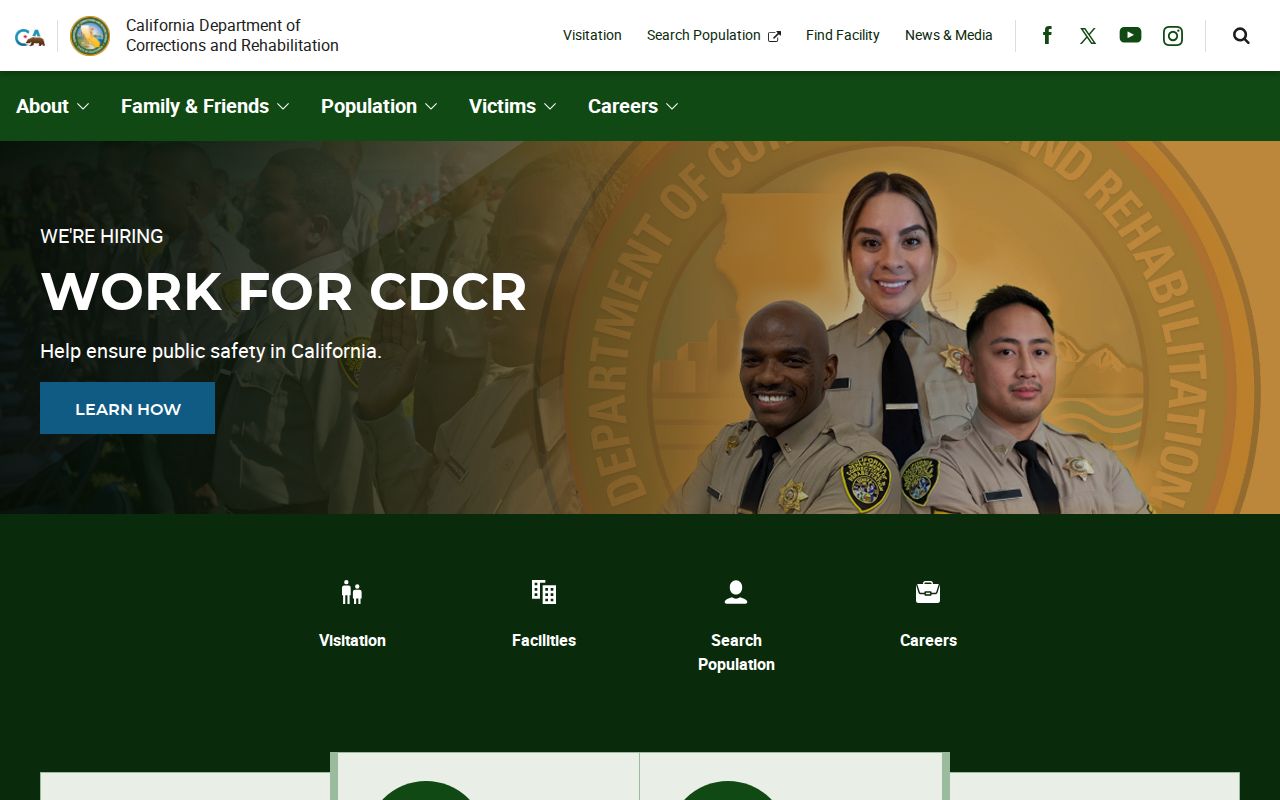
Its agency navigation does not replace a focused search for the person, release action, or discharge document.
California Release Record Fields
There is no single California release-record format. At the county layer, Government Code section 7923.610 identifies arrest and booking information that includes the time and manner of release or the place where the person is held, unless a stated safety or investigation exception applies. County systems may also expose a booking number, charges, bail, or disposition. At the state layer, the needed fact may sit in a release action, sentence calculation, discharge record, parole file, or PRCS notice. CIRIS is a current-custody locator and does not document former-prisoner release fields.
| Field | What it can establish |
|---|---|
| Name and identifier | Connects a person to a booking, CDCR, or federal number |
| Custody agency | Shows which office held and released or transferred the person |
| Release time and date | Dates the custody exit when the custodian records it |
| Manner of release | May distinguish bail, time served, parole, PRCS, discharge, or transfer |
| Charge or commitment | Connects the custody record with the case or prison term |
| Supervising agency | Routes parole to DAPO or PRCS to county probation |
A record can omit fields or carry redactions. Juvenile, confidential, sealed, and safety-sensitive material follows separate limits. Missing information must not be filled through guesswork.
Request California Release Records
Start with a narrow request to the correct custodian. A county jail release belongs with that county's sheriff or corrections records unit. A state-prison release belongs with CDCR. The filing superior court holds trial-court case records. Ask for a defined event and date range rather than an undefined complete file. Include the full name, aliases, date of birth, known identifier, facility, and approximate custody dates when available.
- Identify whether the last custodian was a county jail, CDCR, BOP, or ICE.
- For a county release, use the California County Directory and follow that locality's official records route.
- For state prison, use the CDCR Public Records Portal and name the release action, calculation, or discharge record.
- Ask the filing superior court for the docket when a bail order, dismissal, sentence, remand, or custody credit explains the exit.
- Keep the response and correspondence together because no statewide archive merges all layers.
The CDCR contact and Identification Unit page provides records routing and help when a person is not found.
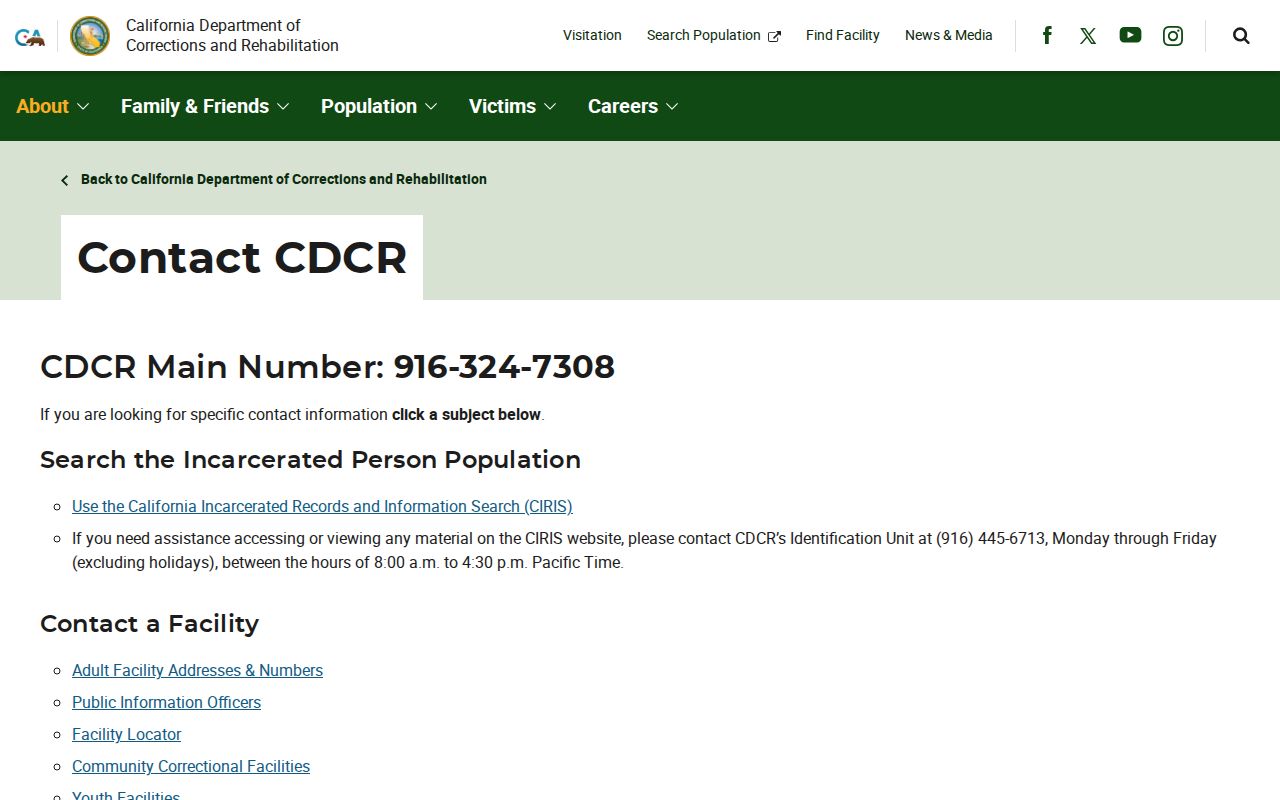
The Identification Unit resolves identity or status questions. The records portal handles a request for an agency record.
CDCR also maintains a specialized Archives Unit route for certified Penal Code section 969b packets concerning discharged people. That process requires the CDCR number and is framed for official or agency requesters, so it should not be promised as a general public shortcut. CDCR states a minimum of fifteen business days for a California request and thirty business days for one from outside California. The request may require an authorization, and one person may have more than one CDCR number. County jail, federal, and probation commitments remain with their own custodians.
California Release Records Law
The California Public Records Act starts with access to records in agency custody, but exemptions still apply. Government Code section 7922.525 governs the initial determination. CDCR describes a ten-calendar-day determination period, with a written extension of up to fourteen days for unusual circumstances. That is a decision timeline, not a delivery promise. Government Code section 7923.610 more specifically names release information.
Key rule: Government Code section 7923.610 supports a focused request for release time and manner, subject to its safety and investigation exception.
Public access does not mean every correctional file is open. Privacy, safety, investigative, juvenile, and other limits can restrict a response. Research did not establish one statewide retention term for all county release records. Sealing or other court relief may change disclosure, but sources may update at different times.
California Release Photo Rules
California applies two distinct rules to booking photos. Civil Code section 1798.91.1 bars a publisher from taking payment from the arrested person to remove, correct, alter, or withhold a booking photograph. Penal Code section 13665 generally limits police or sheriff social-media posts about nonviolent arrests, with stated exceptions, and usually calls for removal within fourteen days. The latter excludes agency websites and electronic systems from its definition of social media.
Neither rule erases all official arrest or California release records. They govern different conduct and channels. A request for a booking photo still goes to the official custodian, and any court restriction must be assessed for that record.
Find California Released Inmates
Begin with custody ownership, not a broad name query. A current county roster can show that someone remains in that jail, but a missing name cannot prove release. CIRIS can show current CDCR custody, yet CDCR does not document it as a historical release archive. A BOP result can expressly show Released or Not in BOP Custody, but only for federal custody. ICE's locator covers current adult detention, not past releases. Each negative result needs a second source.
- Write down the full name, birth date, known number, last facility, and approximate custody date.
- Check the last known custodian's live system for current custody.
- For county jail, seek that county's release record and superior court docket.
- For CDCR, check CIRIS, then use the Identification Unit or request the release action if no current result appears.
- Use BOP for federal custody, ICE for current immigration detention, and the correct agency for supervision.
Important: Not found means the selected system did not return a match. It does not establish a California release.
The CIRIS search screen accepts a CDCR number or a name after its disclaimer.
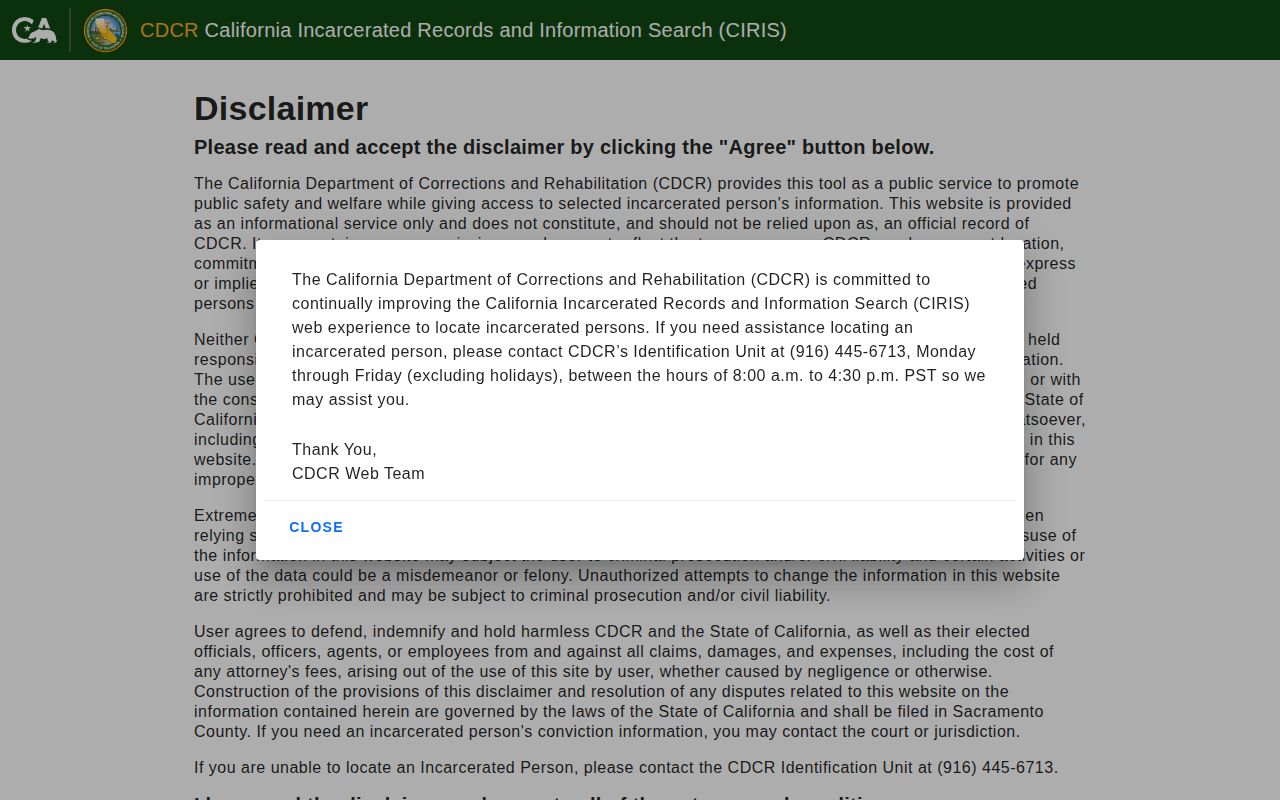
A match confirms selected current CDCR custody information. The loss of a match requires confirmation elsewhere.
CDCR Search and California Release
The CDCR offender search route is CIRIS, the California Incarcerated Records and Information Search. Its documented public result fields include name, age, CDCR number, current institution, date admitted, commitment county or counties, and a parole-eligible month and year. Search by CDCR number when possible. A name search can be narrowed by age information, and the Identification Unit may use a birth date to distinguish people with similar names.
| Search item | Use and limit |
|---|---|
| CDCR number | Best public identifier for a person in CDCR custody |
| First and last name | Useful when the number is unknown; test known spelling variants |
| Age range | Helps narrow people with the same name |
| Current institution | Confirms the location shown by CDCR at that time |
| Parole-eligible month and year | A review milestone, not a promised California release date |
CDCR has not documented a CIRIS Released or Discharged label, completed release date, release type, supervision field, or former-record retention period. The CDCR offender search page gives the full state-prison workflow.
California County Release Searches
California has fifty-eight county record paths. The research roll-up found live name rosters, Citizen RIMS systems, weekly booking files, VINE routes, and counties where a focused records request is the durable option. Alpine County uses a contract-jail model. Other counties run several jail sites but one central inmate system. The correct county is usually the county that booked or held the person, not the county where the person lives or where a state prison stands.
The California County Directory routes to each locality's released-inmates coverage. Once there, check the live roster only for current custody. For a past event, seek the sheriff or county corrections release record and the filing superior court. Follow a transfer to the receiving custodian.
The California Courts case routing page explains why trial records must be sought where the case was filed.
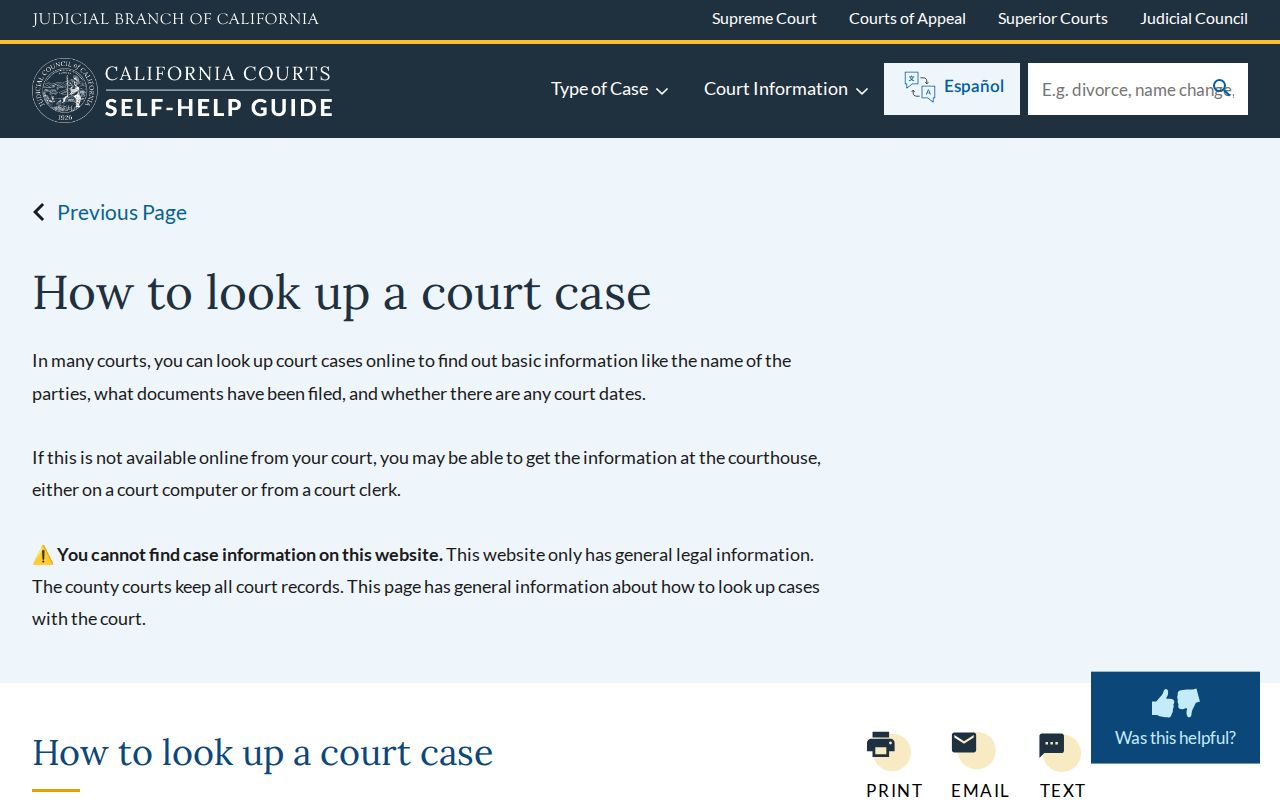
A docket may show bail, own-recognizance release, dismissal, sentencing, custody credit, probation, remand, or prison commitment.
California does not operate one central public name search for all trial-court dispositions. Each county has a superior court. Courthouse access exists for electronic records the court maintains, while remote criminal access may be limited to calendars, indexes, or a register of actions. Confidential and nonelectronic records remain restricted. The statewide appellate docket covers Supreme Court and Courts of Appeal matters, not the local trial record that usually explains a jail release.
California Supervision After Release
California splits post-prison supervision by category. CDCR's Division of Adult Parole Operations, or DAPO, runs state parole. County probation departments run PRCS and probation. Penal Code sections 3451 through 3457 route qualifying prison releases to PRCS, while excluded categories remain on state parole. Section 3457 states that CDCR has no jurisdiction over a person on PRCS. The release notice is a key routing record because it names the responsible county agency.
Discharge means parole has ended. Depending on the case, DAPO or the Board of Parole Hearings may control that decision. CDCR Form 163 certifies discharge from CDCR jurisdiction on existing felony commitments. Physical release, a parole grant, PRCS placement, and final discharge are different facts. California post-release supervision must be verified with the responsible state or county agency.
The CDCR PRCS contacts page reflects the county handoff and release-packet process.
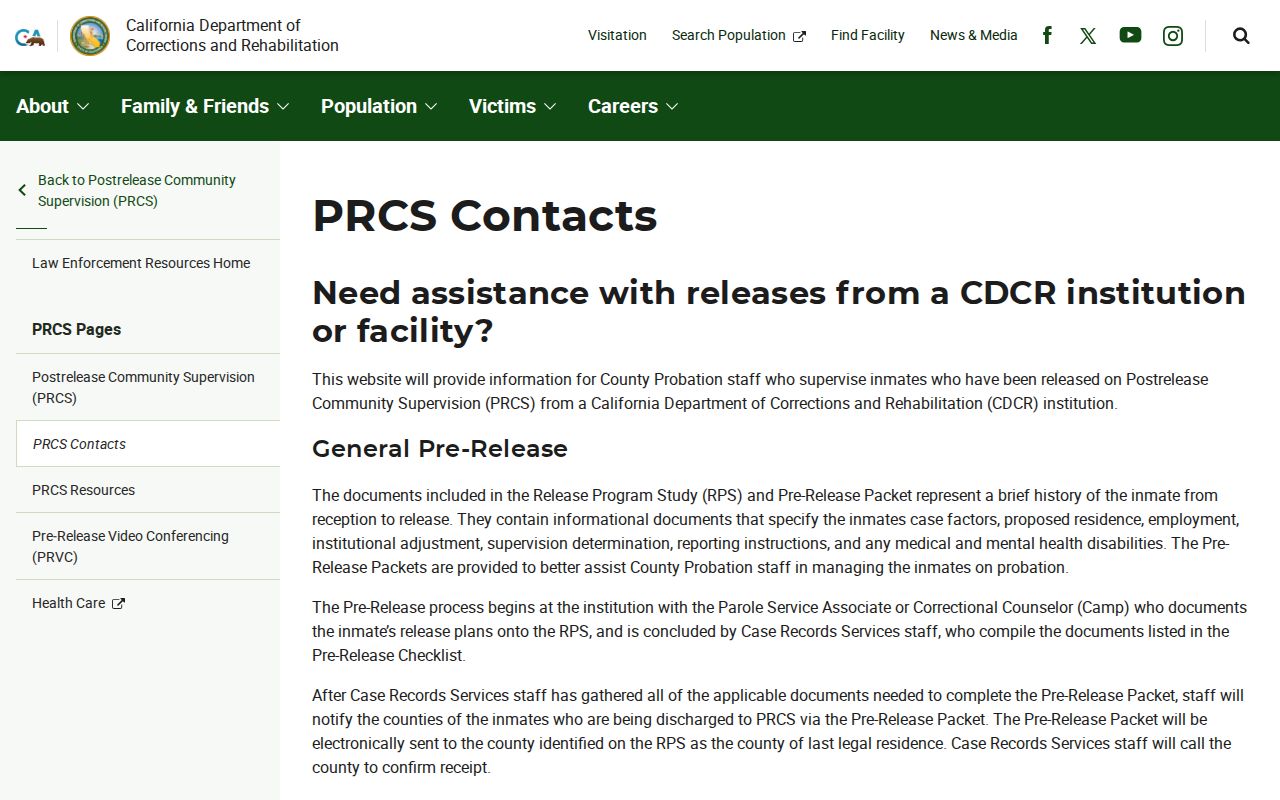
A prison in one county may release a person to probation in another county based on the release plan.
California Parole Release Trend
CDCR's Spring 2026 population projections counted 34,365 people on active parole on June 30, 2025. That was down from 53,427 on June 30, 2020, a reduction of 19,062 people, or about 35.7 percent. The projection estimates 31,028 people on active parole by June 30, 2030. CDCR links much of the decline after 2020 to parole-term caps and revised earned-discharge processes.
These are parole population figures, not annual release counts. CDCR's latest identified recidivism cohort separately studied 34,215 people released in fiscal year 2019-20. That figure describes a research cohort, not today's yearly total.
California Release Notification Routes
California VINE and CDCR notification are separate layers. VINE supports specific-person county-jail searches and notices from participating agencies. CDCR directs eligible victims, family members, and witnesses to a separate registration process for state-prison notice after transfer. No authoritative source promises identical participation across all counties, a universal release-date field, or a fixed period for a released VINE record.
The VINELink interface begins with a state and agency selection.
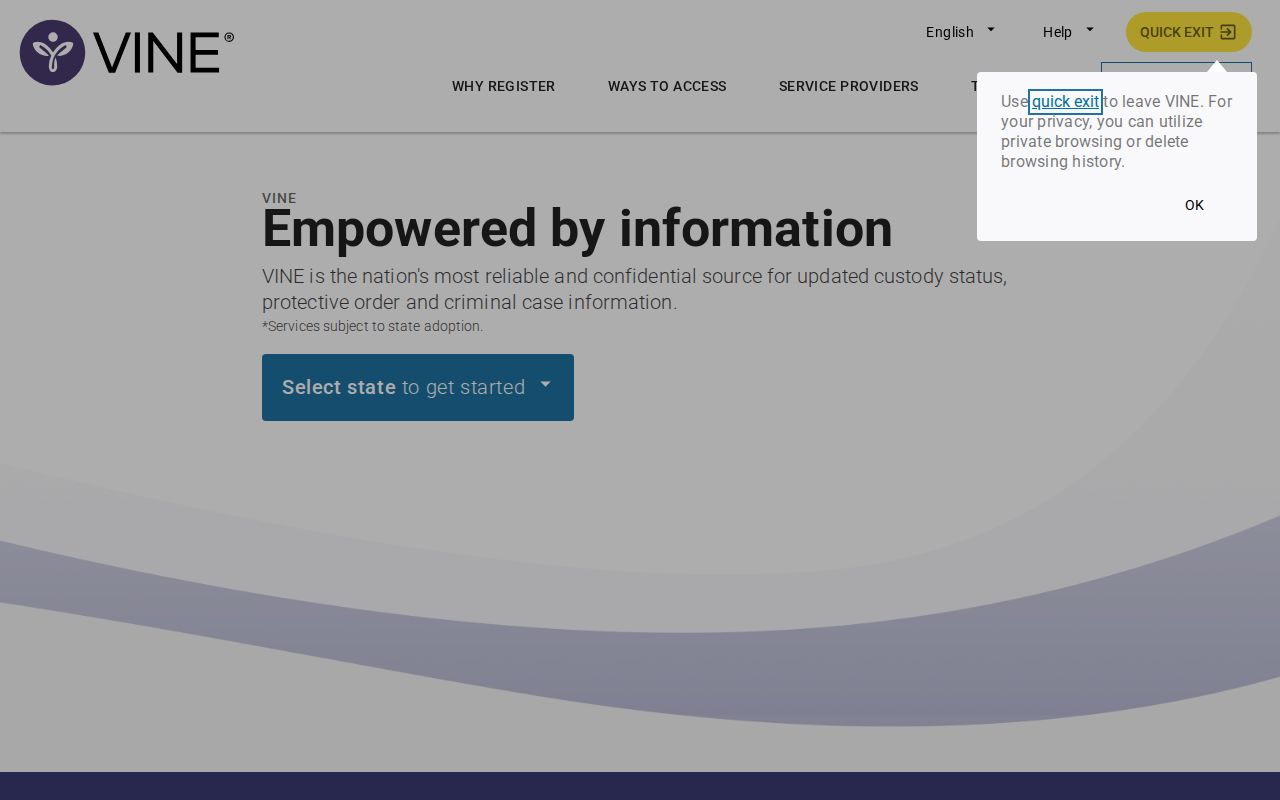
Use the matching county or facility. A no-result calls for spelling, county, custodian, and participation checks.
The CDCR victim notification registration is the distinct state-prison route for eligible registrants.
This handoff keeps VINE from being mistaken for one archive of every California custody event.
Federal Releases in California
The BOP locator covers federal prisoners from 1982 to the present. It accepts a BOP register number in the five-digit, hyphen, three-digit format or a name with age, race, and sex refinements. Results can show a release date and Released or Not in BOP Custody. Those labels mean the person is no longer in BOP custody. They do not rule out California, local, ICE, or other custody, and they do not prove federal supervision has ended.
The BOP Inmate Locator is the federal source for that limited status and date.
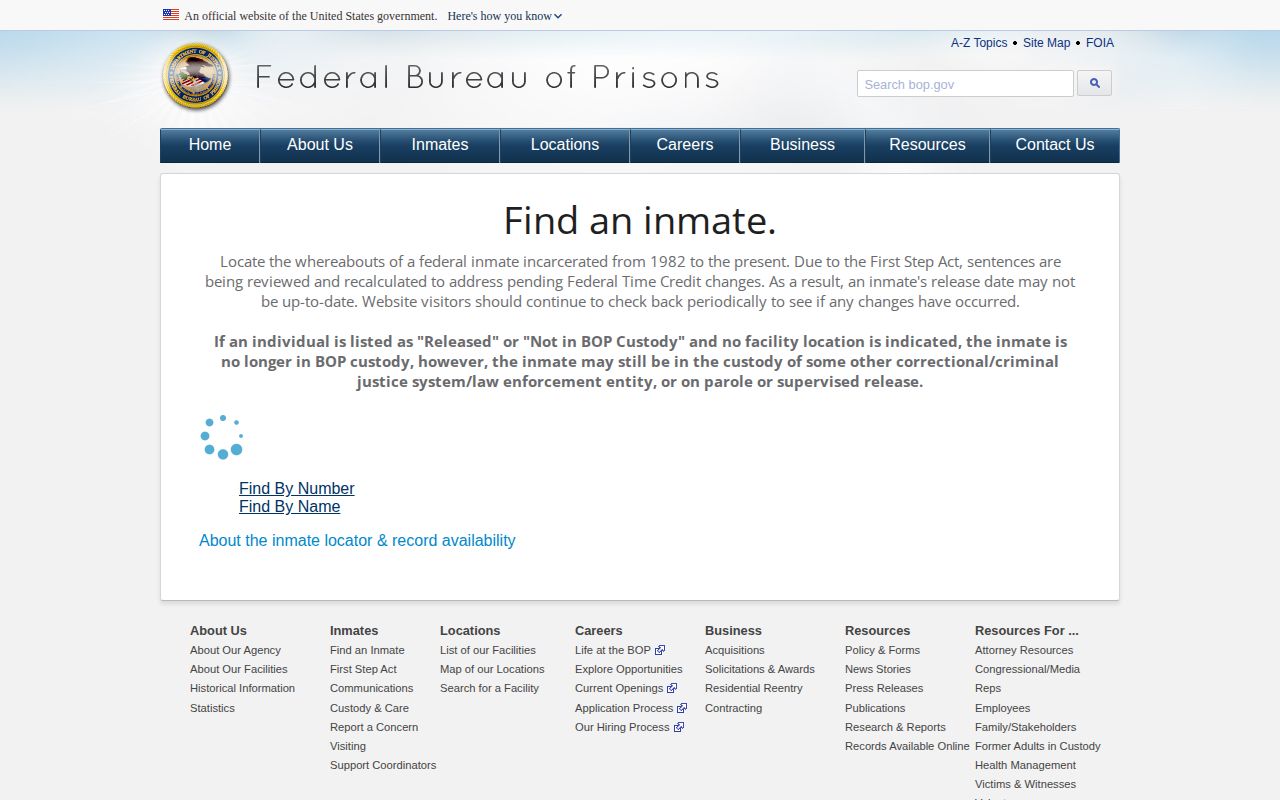
For a current federal prisoner, BOP warns that First Step Act credit recalculations can move the projected date.
ICE's Online Detainee Locator searches adults currently in ICE custody or in CBP custody beyond its stated intake window. It is not a historical release or removal database. A no-result cannot prove release, removal, or freedom from another custody system.
An ICE search can use a nine-digit A-number and country of birth. Leading zeroes may be needed. The alternative uses exact first and last name, country of birth, and birth date, so spelling and hyphenation matter. The locator does not search people under eighteen. For an unresolved current-status inquiry, ICE lists its Detention Reporting and Information Line for weekday calls. That channel still addresses current immigration custody, not a past California county-jail release.
California Release Status Compared
Each public system answers a narrow question. Current custody tools are useful because a positive result shows where a person is held. They become weak when they return nothing. Historical or event records are needed to prove the exit. The comparison avoids treating a blank search as a release record.
| System | Positive result | No result |
|---|---|---|
| County live roster | Current custody in that county | Release, transfer, movement, suppression, or mismatch remains possible |
| County release record | Recorded local exit or holding place | Ask about scope, dates, spelling, and exemptions |
| CIRIS | Selected current CDCR custody facts | CDCR release is not proved |
| BOP locator | Federal custody or express BOP release status | Other custody remains possible |
| ICE ODLS | Qualifying current immigration custody | Release or removal is not proved |
The BPH hearing schedule adds another narrow fact for some state prisoners.
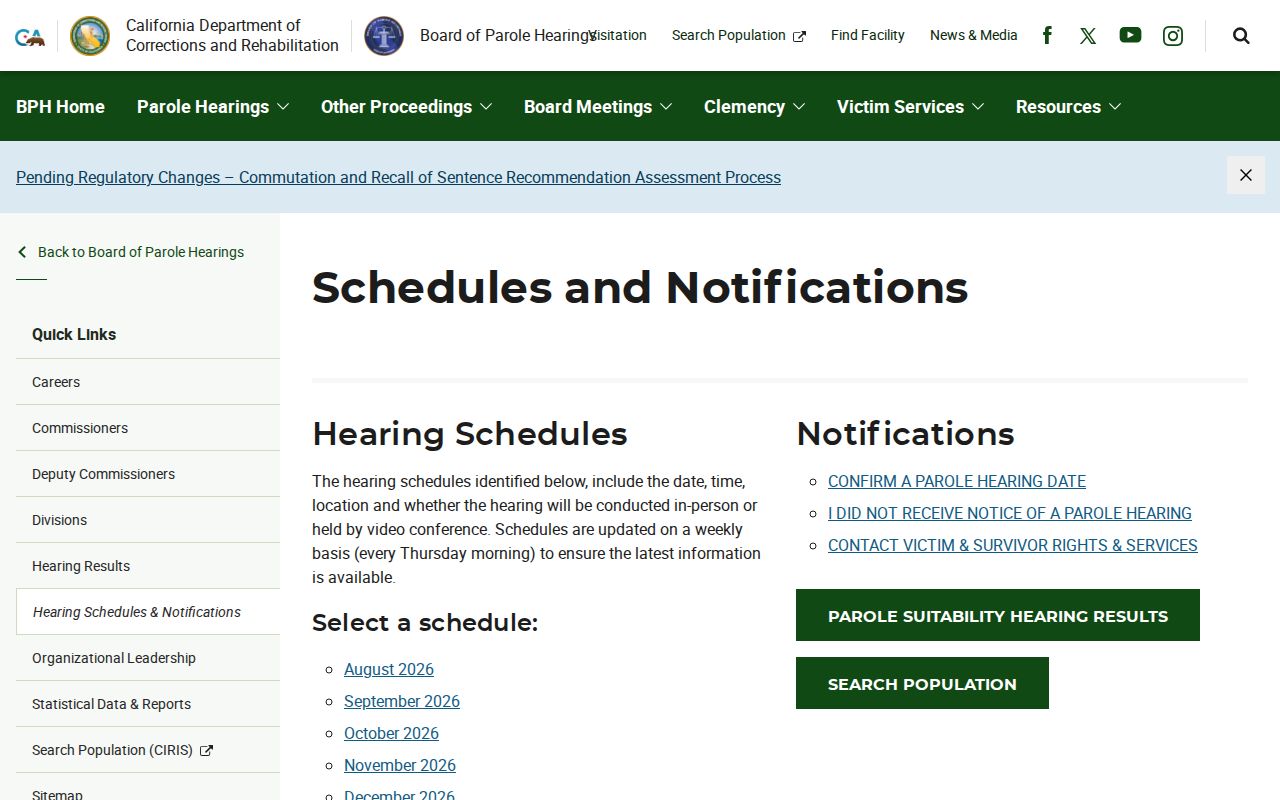
An upcoming hearing is not release. Even a grant recommends release to parole and remains subject to later review.
California Release Facility Directory
California custody sites include county jails, municipal jails, CDCR prisons, conservation camps, federal prisons, and immigration detention centers. Closed facilities remain relevant only for historical record routing and must stay clearly labeled. Juvenile custody follows separate confidentiality rules. A probation office, court, or noncustodial program should not be mistaken for a detention facility.
The California Facility Directory lists every researched site in one alphabetized table. Covered names lead to an existing county facility page. Uncovered state or federal sites remain plain text, so the directory does not invent a destination. Custody type indicates whether the next record should come from a county, CDCR, BOP, or ICE route.